Dr Amy Perkins

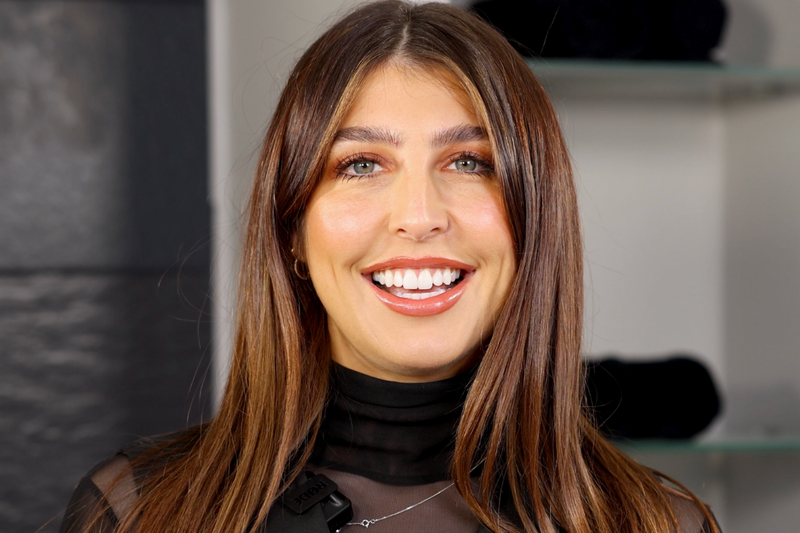
A smiling woman with blonde-highlighted brown hair wearing a pale yellow and white gingham top, gold hoop earrings, and a delicate gold necklace, photographed against a light gray studio background.

Dr Amy Perkins is a Consultant Dermatologist providing specialist care for adults and children with a wide range of skin, hair and nail conditions. Her clinical practice encompasses general medical dermatology, skin cancer, inflammatory skin disease, hair disorders, paediatric dermatology and contact allergy. 

Alongside her clinical practice, Dr Perkins has a strong interest in medical education. She holds a Postgraduate Diploma in Medical Education from the University of Dundee and has completed a Master’s degree in Skin Ageing and Aesthetic Medicine at the University of Manchester. She is involved in undergraduate and postgraduate medical education and has served as an Honorary Clinical Lecturer at the University of Glasgow. 

Dr Perkins sits on the Board of Examiners for the Royal College of Physicians, where she contributes to the development and assessment of postgraduate medical examinations. Her work with the College also includes projects exploring examination security and the use of technology to protect the integrity of high-stakes medical assessments. 

She is the Clinical Dermatology and Public Health Lead for Skcin, the Karen Clifford Skin Cancer Charity, supporting national initiatives focused on skin cancer awareness, prevention and education. She also works with the Scottish Government as part of its Sunbed Working Group, which is exploring future approaches to sunbed regulation and public health in Scotland, and also serves on the UV Safety Coalition with the British Beauty Council, specifically on the taskforces encompassing Digital Messaging, Misinformation and Public Health Misinformation. 

Dr Perkins is a regular contributor to national media on skin health, sun protection and the growing impact of health misinformation online. She has a particular interest in social media literacy and is involved in international work examining how healthcare professionals can use social media safely, ethically and responsibly. 

Her work sits at the intersection of dermatology, technology and communication. She has collaborated with OpenAI on the development and evaluation of large language models, including work related to ChatGPT, and has a strong interest in the responsible integration of artificial intelligence into healthcare and wider society. 

She is currently writing a book for Wiley exploring social media, health communication and misinformation, with a particular focus on skin health and ultraviolet radiation. She also serves on a number of dermatology and skincare industry advisory boards, providing clinical and scientific expertise across patient education, public health and evidence-based communication.

Clinic

Why you wanted to be a part of Face the Future's Dermatology panel?

What drew me to Face the Future is their understanding that skincare is personal: it’s about finding what works for you and feeling good in your own skin. I’m excited to bring my voice to this project and work with the team to create something their community can really connect with.

Which skincare trend have you seen gain momentum during 2026 that concerns you most as a dermatologist, and why? 

What concerns me most is the pursuit of an unattainable idea of perfect skin, alongside a growing disconnect between skincare and medical care. Every small variation can become something to correct, yet people with conditions like acne may keep buying products without realising how much help is available through a doctor, including prescription treatments. We need to help people understand both what normal skin looks like and when a skin condition deserves medical attention.

Do you think social media is changing young people's perception of what normal skin should look like?

Yes, and it’s affecting adults’ expectations too, including what parents think their children’s skin should look like. When perfectly smooth, even skin becomes the benchmark, we risk treating ordinary variations as faults and passing those expectations on to children, however well-meaning we are. I worry that repeatedly drawing attention to minor imperfections can leave a child feeling their appearance needs constant improvement, with self-consciousness that may outlast the original skin concern. 

We're seeing increasingly sophisticated skincare marketed to younger consumers. Where do you think brands and retailers have a responsibility to draw the line?

Marketing skincare to children without a genuine skin health need is concerning, particularly when it encourages complicated routines or the use of strong active ingredients that may not be appropriate for younger skin. Brands and retailers have a responsibility to provide clear and accurate information, and avoid creating unrealistic expectations about what healthy skin should look like. For children and young adolescents, advice about a skin concern should come from an appropriately qualified healthcare professional, who can consider both their skin health and emotional wellbeing, as well as navigating the challenging dynamics of parenting in the social media era. Brands and retailers have a responsibility to avoid encouraging unnecessary routines and to recognise that sometimes the most responsible advice is reassurance that normal skin does not need correcting. 

If a parent discovers their child following a complicated skincare routine they've seen online, how would you suggest they approach the conversation?

Start with curiosity rather than criticism: ask your child what they’re hoping it will do for their skin. Reassure them that skin naturally has texture, blemishes and changes from day to day, and that every small imperfection doesn’t need correcting. Then look together at the perceived problem, always ensuring their psychological safety, and seeking medical advice if there’s a concern such as acne or eczema, rather than leaving them feeling they need to keep adding products. 

Danielle Amos X R+Co Masterclass

About the Skin Health Alliance

We're the Skin Health Alliance: the world's leading independent skin health accreditation body. You may have seen our logo on some of your favourite skin and personal care products, which means they have been dermatologically approved by us for meeting our high standards of skin safety and efficacy. 

Alongside our product accreditation, we also work with dermatologists, scientists and industry leaders to advance skin health education, support skin disease research, and build everyone's skin confidence.